Notes
-

Immaterials at the Vimeo awards 2012
The film Immaterials: Light painting WiFi, made with Einar Sneve Martinussen and Jørn Knutsen as part of the YOUrban project, is a finalist at the Vimeo Awards 2012. Awards ceremony on 7 June, New York City.
-
Talk to Me
I have five works in MoMA ’s latest exhibition ‘ Talk to Me ’ in New York. The works are Nearness , Immaterials , Media Surfaces , The Journey and Suwappu . I have written more about the exhibition and the works at the Touch and BERG weblogs. The exhibition has also been reviewed by CNN , the New York Times , Fast Company and the Wall Street Journal amongst others .
-
The films of Adam Lisagor
I’ve been quite taken with the films of Adam Lisagor for a while. He’s good at surfacing the joy and pleasure in some of the smallest interactions, particularly evident in this ad for the Jambox by Jawbone .
-

Mother. Father. Always you wrestle inside me.
Clippings from Kartina Richardson’s writing on Terrence Malick’s The Tree of Life, on the voluptuous, bulging energy of the film, on Jessica Chastain and Hunter McCracken, and on how to approach the dinosaur sequence: “Just listen.”
-
Connecting the digital world with print
A rare piece of writing from Durrell Bishop : Read the whole thing: Connecting the digital world with print .
-
Olars: physical toy inspired by karl sims evolved creatures
A lovely piece of work by Lars M. Vedeler and Ola Vågsholm from the Tangible Interactions course at The Oslo School of Architecture & Design: Olars on Vimeo
-

The future is Movie OS
A note on Dan Hon’s Movie OS piece. The idea that Apple is grasping at real-life objects because they support effective visual storytelling is very interesting. Hon argues that visual storytelling hardly exists at all in computer or consumer electronics user interfaces.
-
Proximity payments
YouTube – The new PayPal iPhone app seems to use the Bump API to match up two physical gestures and make a payment. (I even like their tacky faux-anthropology video). And Square has just announced their payment app for the iPad.
-
CCD and computational photography
A few links on imaging and computation: from CCD by Joe Gregorio . Via BERG. from Computational Photography, American Scientist from What Photography Will Look Like By 2060
-
3D secret – hidden pictures
Beautiful new exploratory game for the Nintendo DS, that uses the front-facing camera and face tracking to calculate a perspective that renders like a window on a new world. DSi「立体かくし絵 アッタコレダ」(Looksley’s Line Up) . Via BERG
-
Augmented (hyper)Reality
Augmented (hyper)Reality by Keiichi Matsuda A competent visualisation of an undesirable future.
-
Augmentia
Anselm Hook , one of the founding thinkers of the geo-web, co-organiser of the first ARDevCamp at the Hacker Dojo in Mountain View late last year, lays out the emerging issues with Augmented Reality. He relates it to a whole host of known and unknown problems around ubiquitous computing, semantic publishing and data platforms. A few passages worth holding on to:
-
Things
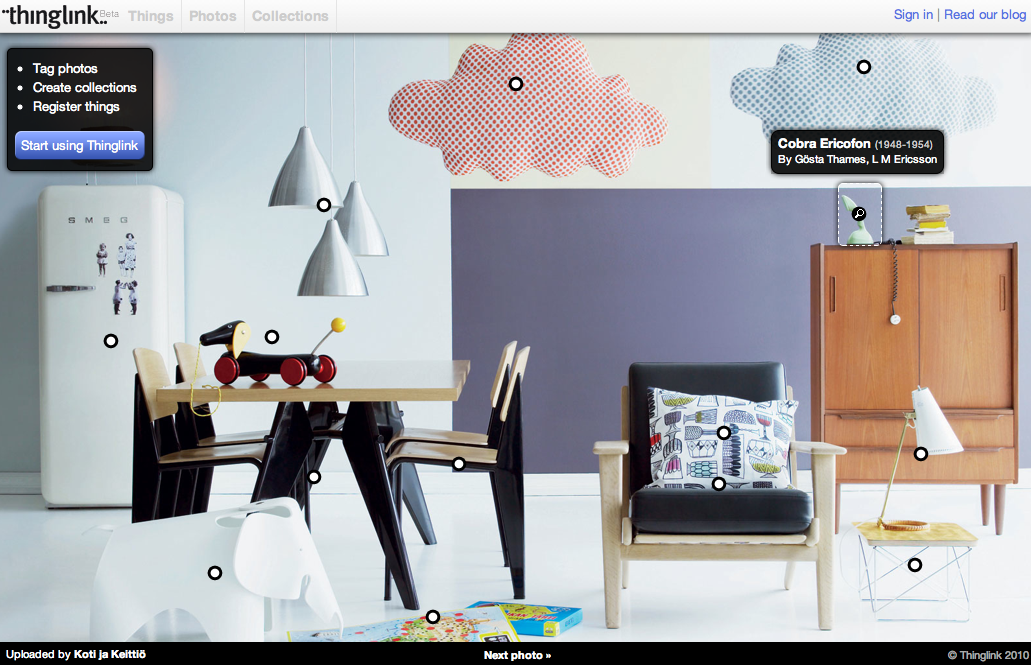
A short note on a cluster of emerging ‘things’ services in early 2010. Thinglink’s exploratory homepage, SVPPLY’s continuous navigation of want, and related services like Thingd and Allconsuming.
-
Pour votre sécurité
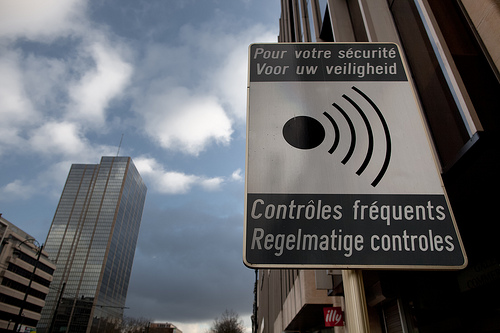
A single photograph of ‘Pour votre sécurité’ signage, dated 17 January 2010.
-
Parallel tracking and mapping for small AR workspaces
I love how it goes in and out of register, and how it ‘picks up’ the registration from an initial set of objects. People will end up intuiting that AR works in certain ways “not around trees” for instance, or only in “static scenes”. YouTube – Parallel Tracking and Mapping for Small AR Workspaces (PTAM) – extra .
-
Speculative practitioners symposium at the AA
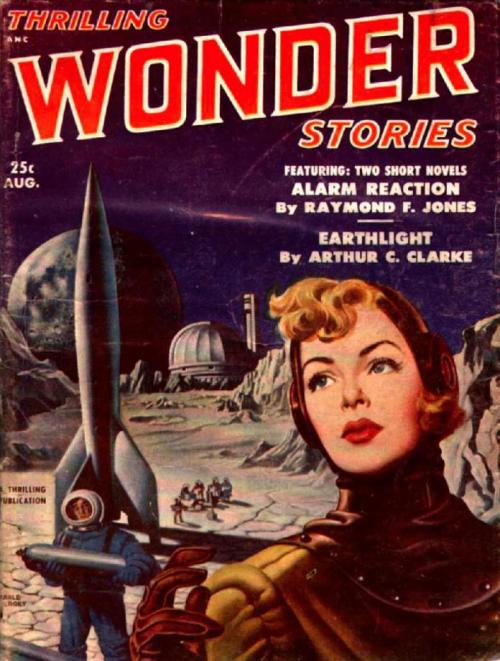
A note on the AA School’s symposium on speculative practitioners, bringing in gaming, film, comics, animation, literature and art as alternative models and test sites for architectural imagining.
-
Aurora: Mozilla Labs concept video by Adaptive Path
Aurora is a concept video exploring one possible future user experience for the Web, created by Adaptive Path as part of the Mozilla Labs concept series.
-

Olinda: digital radio prototypes from Schulze & Webb
A note on Olinda, a set of home digital radio prototypes by Schulze & Webb (later BERG). A small number of fully functioning prototypes showing that it’s possible to design social, Web-like experiences using industry-standard DAB chip-sets and conventional manufacturing.
-
Schulze on design as invention
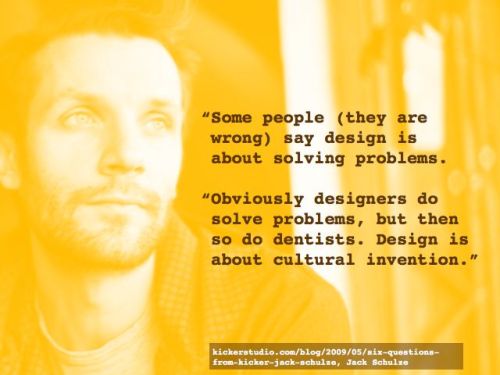
Jack Schulze, quoted in Matt Webb’s Scope talk at reboot11, arguing that design has to invent, to create new ways of doing things and to contribute to culture. From slide 4 of 44.
-
The original Nintendo Wii trailer
The original trailer for the Nintendo Wii (when it was still the “Revolution”). The first time we got to see such tangible, gestural gaming in the mainstream. (note how little we see the screen)
-
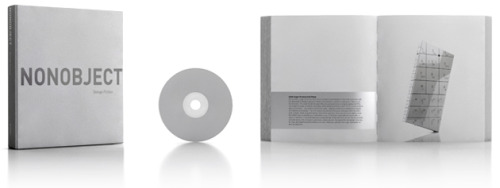
Design fictions as a book
A note on Nonobject’s book of “design fictions”, objects that cannot exist because the material, business plan, manufacturing process, infrastructure or human sensibility is not yet available. Creating them makes it possible to explore the meaning of design at a more profound level and to think more richly about what is and what might be.
-
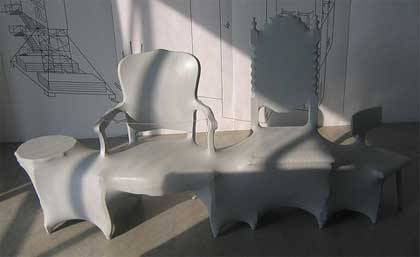
Boelen on critical design’s gimmick problem
A note on Jan Boelen’s argument that when journalists cover Guixé, Bey or Dunne & Raby they tend to pick out the gimmick side of the work and miss the global vision, and that an international crowd has grown up imitating that gimmicky surface. Via we-make-money-not-art.
-
What is critical design?
Critical Design uses speculative design proposals to challenge narrow assumptions, preconceptions and givens about the role products play in everyday life. It is more of an attitude than anything else, a position rather than a method. There are many people doing this who have never heard of the term critical design and who have their own way of describing what they do. Naming it Critical Design is simply a useful way of making this activity more visible and subject to discussion and debate.
-
An idea
We need to find a way of talking about visualisation and forefronting the conceptual and cultural elements of the design practice, while putting the ‘dataviz’ aspects in the background. Also need to find some way of wrapping up the visualisation, evidencing, provocation, probing, aspects of design (need a good word for that).
-

You are here
A 2006 note on collecting images of ‘you are here’ marks, or ideo locators, at Flickr. The relationship to local physical space is what makes them work: mapping with a point of view, maps as a direct interface to the world. The best example to date is from Seoul, where 3D cross sections of a metro station are directly related to the point at which you are looking at the map.
-
Design Engaged 2005
Three days of conversation, urban exploration and brainstorming in Berlin, November 2005, the second Design Engaged. Adam Greenfield opened on energy decline and the coming implications for design, Anne Galloway on the parliament of things, Joshua Kaufman on the politics of artefacts, Fabio Sergio on whether interaction design has any material at all. Design Engaged 2005, organised by Andrew Otwell for a second year. Raw notes from three days of sessions, preserved as written at the time. Speakers included Adam Greenfield, Matt Ward, Joshua Kaufman, Anne Galloway, Michelle Chang, Thomas Vander Wal, Louise Klinker, Malcolm McCullough, Fabio Sergio, Stefan Smagula, Chris Heathcote, Jyri Engeström and Ulla-Maaria Mutanen, Matt Webb, Nurri Kim, Jack Schulze, Régine Debatty, Liz Goodman, Eric Rodenbeck with Michal Migurski (Stamen), Molly Wright Steenson, John Poisson and Ben Cerveny. Restorative feeling of getting together The architecture of participation Experience design is participation design Ethical and social implications of ubicomp Has been reading far afield: Out of Gas , Dark Age Ahead , Collapse Growth and decline Models of growth: 1. Health of economy is based on growth 2. Continuous growth: technological singularity, going off the charts 3.
-
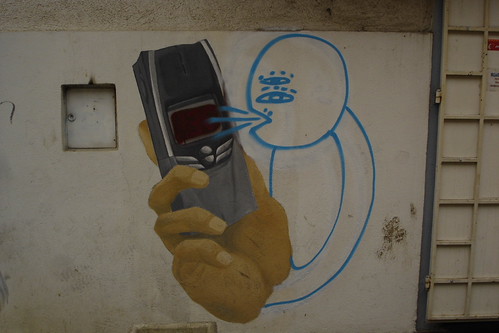
Graffiti as conversation
A short 2005 observation: photographing layers of conversation in graffiti, tagged ‘conversation’ on Flickr, prior art for thinking about spatial annotation on shared public surfaces.
-

Photos of touch-based interfaces
A February 2005 note that became the start of a longer-running photographic project. In the way Victor Lombardi was collecting images of cardreaders, I was starting to collect images of touch-based interfaces like the Oyster card and other ‘touchable’ interfaces on public transport.
-
Updates
Notice the new clean URLs. I have been working on this for months, but could never get right in Textpattern. Unfortunately this means broken links for old content, all 60 or so posts of it. I’ll try and resolve navigation to make these old things more findable. Update 15 February 2005: Nearly there, WordPress 1.5 has arrived, I’ve been waiting on this to get everything sorted. The site shall soon be back to its former self, and out of its few months of schizophrenic growing pains.
-

Spatial memory at Design Engaged 2004
Presentation notes from Design Engaged 2004 in Amsterdam. Two related strands: the Time that land forgot project with Even Westvang (five months, 8000 photos, visualised by date and time of day), and the research on marking in urban public space.
-
Design Engaged 2004
Twenty-odd designers, researchers and writers sat around a long table in Amsterdam over a weekend in November 2004, taking turns to present. These are my notes, session-by-session, as written at the time. Design Engaged 2004 was an invitation-only gathering organised by Andrew Otwell. A small, intense weekend of conversation that turned out to be one of the generative moments of the design-web at that period. The FAQ has the full list of attendees. There are also lots of photos on Flickr . The growth of the soil How do we comprehend complexity How do we build structures around complex information Accreting meta-data: GPS data, descriptive information Break down of material as it hits the soil Soup, tags, condensed and distilled meta objects Sorting mechanisms, affinity browsers, related, filtering, emergent relationships, interrelationships How do we conceive a metaphor for building these processes? A structure that is meaningful for the users. Application design: movement through states of application to tending a flow of processes Tending to meta-data is a growth process DLA: diffusion-limited aggregation, a natural process model The relationships between metadata can be visualised as this.
-
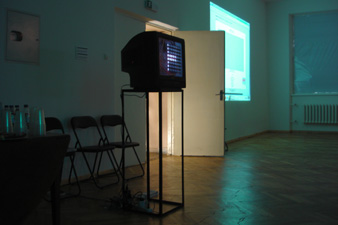
Art + communication 2004
Notes from Art + Communication 2004, organised by RIXC in Riga, Latvia, the final event in the Trans-cultural Mapping workshop series. Even Westvang and I presented our Timeland project. A trip to Limbazi for the opening of the Piens (‘milk’) project, milk routes through the EU, mapped through the personal stories of the people along them.
-
Physical computing workshop
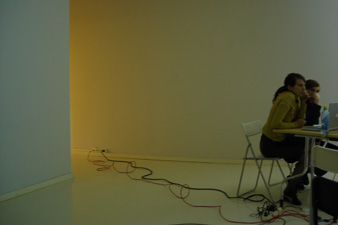
Notes from the ‘Making Sense’ physical computing workshop at Atelier Nord in Oslo, September 2004, organised by Erich Berger with Helen Evans and Heiko Hansen of HeHe. The intention was to avoid the screen entirely, to concentrate on simple interactions between sensors and outputs. But here we are, staring at PBasic and JAL while making lots of LEDs blink.
-
Public marking photographs
A short September 2004 pointer to a Flickr set of images of stickering, graffiti and flyposting , supporting material for the research into spatial annotation. There’s an ever-updated selection under the “ marking ” tag on Flickr. See the Design Engaged 2004 presentation for fuller context.
-

ISEA 2004 conference
A short 2004 note from ISEA, the International Symposium on Electronic Art, held that year on a Silja Line ferry between Helsinki, Stockholm, Mariehamn and Tallinn. Polarfront kept event notes through the run, and Grandtextauto covered the installations and artwork.
-
Design research books
This is one of a series of reading lists I put together between 2002 and 2004 when I was starting out in interaction and experience design, building out a personal canon from books I was buying, borrowing from libraries, or lending to students. The lists are grouped by topic. This is the last and shortest list on the shelf, the one on design research as a practice. Norman Potter’s What is a designer and Models and Constructs are the two books that deserve to be read more than they are, compact, sharp and more relevant to design education than most larger textbooks. Brenda Laurel’s Design Research: Methods and Perspectives is the practical anthology. Miller & Lupton’s Design Writing Research is the critical and editorial companion, how design thinking becomes design writing. The Amazon links below are what I had at the time, most will be dead now, but the ISBNs will find you a copy. Norman Potter. amazon.co.uk / amazon.com Norman Potter. amazon.co.uk / amazon.com Brenda Laurel Ed. amazon.co.uk / amazon.com Abbott Miller, Ellen Lupton. amazon.co.uk / amazon.com Jessica Helfand. amazon.co.uk / amazon.com
-
Photography and mapping from Afar
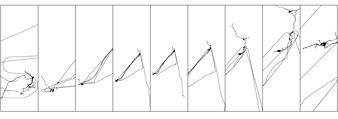
My contribution to ‘Afar’, an exhibition in Copenhagen where 25 international artists produced work to brief. For three months I recorded every walk, drive, train journey and flight I took while photographing daily life. Nine boards of images paired with GPS tracks drawn as simple lines show the transition from London to Oslo across a winter and spring.
-
Iceland inside/out workshop
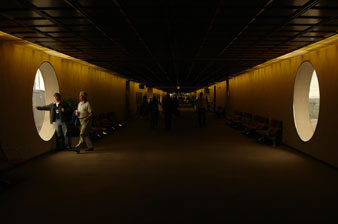
A very short 2004 note from Reykjavik, where I was attending the Trans-cultural Mapping workshop. This workshop was where the ‘Time that land forgot’ project with Even Westvang was made.
-
Loop city workshop
Bill Hillier at University College London describes cities as movement economies, the structure of a city is the pattern of people moving through it. The workshop took this as the starting point and spent two days walking that idea across related fields: spatial organisation, relative space, time-space, taxicab geometry, mental mapping, text maps. Notes from the Loop City workshop at the Outside In symposium in Gothenburg, Sweden, June 2004. The workshop was led by Dietmar Offenhuber and Sara Hodges with participants from the symposium, working across geography, architecture, mapping and locative media. Raw notes below. spacesyntax.com Space explorers : children, homeless, vendors, skateboarders Space utilisers : commuters, workers Exocentric : external, connected Egocentric : centred, point of view Large, diverse research field Abler, Adams and Gould: Spatial Organization: The Geographer’s View of the World Expressing thematic data through spatial differentiation Political maps based on size of army Map of USA based on Elvis concerts Irina Vasiliev: Design Issues for Mapping Time Time as a way of measuring space (one conclusion: the world is shrinking) Grid systems make diagonal m…
-
Mobile outskirts workshop
A bus full of GPS receivers, cameras and impromptu artworks drove fifteen hours from Trondheim up to the islands of Lofoten. The workshop wiki and media archive are being kept updated via fairly limited wireless coverage. A short dispatch from the Mobile Outskirts workshop in Lofoten, June 2004, part of the Trans-cultural Mapping workshop series . A painless and creative bus drive up the Norwegian coast.
-
Outside In
Outside In was a two-day forum at Röda Sten in Gothenburg on 14–15 June 2004, about new voices, media and practices in the design and use of public space. The venue is extraordinary: below a suspension bridge, surrounded by huge concrete creations. Really windy outside, calm inside the lecture space. These are my notes from the talks, written on the day. Occasional asides in italics are things I’ve added looking back. I’ve left the note form mostly as-is. (I missed the first workshop of the day.) Putting memories in spaces. Spaces aren’t the same after having been disrupted. After ‘Reclaim the Streets’ or a Circle Line party you can’t see the space in the same way. Distinction between public and private. What is it? Public space doesn’t exist anymore. Ken Livingstone’s new City Hall is half-private, half-public, private investment was involved in the building, so protests cannot happen outside. Do we need institutions in order to do events? Is that the only way to do them legally? What’s stopping people from doing these things is not necessarily capitalism but the fear of looking like a pillock. Self-regulation is a big factor. Can spark things to let down inhibitions or shackles. Example of the scooter, became a kids’ toy and then it wasn’t cool anymore.
-
Notcon 04
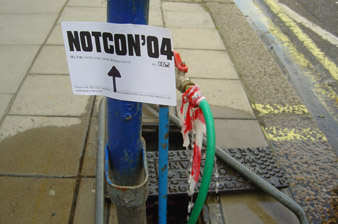
Two things from Notcon 04 in London worth writing up: Spotcodes, very simple circular barcodes readable with a Series 60 camera phone, storing 42 bits of data and usable for positional tracking; and Reverend Rat’s 10-watt Bluetooth receiver, a hundred times more powerful than a Bluetooth dongle.
-
Transcultural mapping workshops
A brief announcement from May 2004. Two workshops on the calendar this summer. The Transcultural Mapping workshop (‘Mobile outskirts: cultural mapping of northern geographical outposts’), in Lofoten in June, looking at GPS and photography in remote Norwegian coastal places. The Loop City workshop at the Outside In symposium (‘Emerging expressions, interventions and participation in public space’) in Gothenburg shortly after, on walking and mapping urban public space with Bill Hillier of Space Syntax. Update: new workshop website .
-

Public markup
Early PhD research into the marking of public space: the physical annotation of the city through stickering, graffiti and billboards. It looks for patterns in visibility, techniques, process, location, content and audience, and argues that the new short-range digital technologies, especially RFID, should be designed the same way. Not invisible.
-
Creative Crossings workshop
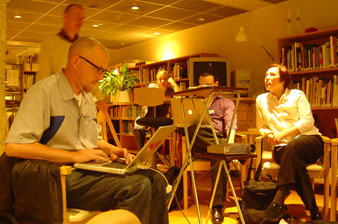
A triangular research network, practitioners from Britain, Canada and Finland, gathered in London to work on participatory and creative applications for mobile, locative and cross-platform media. Organised by m-cult, the Banff Centre and Arts Council England in April 2004.
-
Travelogue
A 2004 note on treating digital photography as a narrative medium, sequences of photos that suggest movement, place, stories and journeys. With plans to tag each image with a GPS coordinate so the sequence carries place as well as time.
-
Interaction design books
This is one of a series of reading lists I put together between 2002 and 2004 when I was starting out in interaction and experience design, building out a personal canon from books I was buying, borrowing from libraries, or lending to students. The lists are grouped by topic. This is the interaction design shelf itself, and the one where I’ve annotated most of the entries in the original post. Jef Raskin’s The Humane Interface is the one absolutely essential book on this shelf; read it first, and read it more than once. Alan Cooper’s The Inmates Are Running the Asylum is the polemical companion. Lucy Suchman’s Plans and Situated Actions is the theoretical counterpoint, an anthropologist’s argument that interaction is situated in context, not specified in plans. Bergman’s Information Appliances and Beyond is the best case-study collection I know. The Amazon links below are what I had at the time, most will be dead now, but the ISBNs will find you a copy. Pink = highly recommended! Eric Bergman ed. One of the best interaction design books to date. With case-studies on various design problems from Palm OS usability to Nokia contextual design issues. Just enough detail and anecdotes to get a good sense of design process. amazon.co.uk / amazon.com
-
Adaptive design books
This is one of a series of reading lists I put together between 2002 and 2004 when I was starting out in interaction and experience design, building out a personal canon from books I was buying, borrowing from libraries, or lending to students. The lists are grouped by topic. This one is on adaptive design: emergence, pattern languages, the design of things that learn or evolve, and the classics on how cities and communities organise themselves. Christopher Alexander is the spine of this shelf, from Notes on the Synthesis of Form through A Pattern Language to The Nature of Order. Stewart Brand’s How Buildings Learn is the architectural companion. Jane Jacobs’s Death and Life of Great American Cities is the urban-planning foundation. Steven Johnson’s Emergence and Mitchel Resnick’s Turtles, Termites, and Traffic Jams are the approachable modern introductions to complex adaptive systems. Rheingold’s Smart Mobs is the early-2000s prediction of networked collective behaviour that mostly came true. The Amazon links below are what I had at the time, most will be dead now, but the ISBNs will find you a copy. Christopher Alexander. amazon.co.uk / amazon.com Christopher Alexander. amazon.com
-
Architecture theory books
This is one of a series of reading lists I put together between 2002 and 2004 when I was starting out in interaction and experience design, building out a personal canon from books I was buying, borrowing from libraries, or lending to students. The lists are grouped by topic. Architecture is the parent discipline of a lot of interaction design thinking, and this list is the shelf I was reading on the theory side: space, the city, urbanism, and the politics of the built environment. Calvino’s Invisible Cities is the book I keep giving to people. Bachelard’s Poetics of Space is the phenomenological counterpart, both are worth reading slowly. Bernard Tschumi’s Architecture and Disjunction and Manhattan Transcripts are the most polemical of the theoretical books. William J. Mitchell’s City of Bits and E-topia are the early digital-urbanism texts that most directly speak to interaction designers working on networked spaces. The Amazon links below are what I had at the time, most will be dead now, but the ISBNs will find you a copy. M. Christine Boyer. amazon.co.uk / amazon.com Nick Barley. amazon.co.uk / amazon.com Manuel Gausa. amazon.co.uk / amazon.com Norman Foster. amazon.co.uk / amazon.com
-
Design management books
This is one of a series of reading lists I put together between 2002 and 2004 when I was starting out in interaction and experience design, building out a personal canon from books I was buying, borrowing from libraries, or lending to students. The lists are grouped by topic. This one is the shortest on the shelf and the most practical, the books on managing design projects, gathering requirements and running workflows. The Robertsons’ Mastering the Requirements Process is the standard reference on requirements gathering. Karl Wiegers’s Software Requirements is the software-engineering equivalent. Goto & Cotler’s Web Redesign is of its moment but it was the manual every web-design studio had on a shelf in 2003. The Amazon links below are what I had at the time, most will be dead now, but the ISBNs will find you a copy. Suzanne Robertson, James Robertson. amazon.co.uk / amazon.com Karl E. Wiegers. amazon.co.uk / amazon.com Jessica Burdman. amazon.co.uk / amazon.com Kelly Goto, Emily Cotler. amazon.co.uk / amazon.com Steve McConnell. amazon.co.uk / amazon.com
-
Information design books
This is one of a series of reading lists I put together between 2002 and 2004 when I was starting out in interaction and experience design, building out a personal canon from books I was buying, borrowing from libraries, or lending to students. The lists are grouped by topic. This one is on information design: the discipline of making quantitative and complex information legible. Tufte’s three books (The Visual Display of Quantitative Information, Envisioning Information, Visual Explanations) are the canonical shelf. But Paul Mijksenaar’s Visual Function is the better first book: smaller, polemical, full of examples, and it prepares you to read Tufte critically rather than as scripture. Colin Ware’s Information Visualization is the scientific companion. Huff’s How to Lie With Statistics is the essential ethical counterpart, a reminder that information design can mislead as easily as it can clarify. The Amazon links below are what I had at the time, most will be dead now, but the ISBNs will find you a copy. Paul Mijksenaar. A small, beautiful and polemical book full of fine examples of good information design, read this before tackling Tufte. amazon.co.uk / amazon.com Edward Tufte. amazon.co.uk / amazon.com
-
Usability books
This is one of a series of reading lists I put together between 2002 and 2004 when I was starting out in interaction and experience design, building out a personal canon from books I was buying, borrowing from libraries, or lending to students. The lists are grouped by topic. This one is on usability, the discipline that gave interaction design its empirical grounding. Don Norman’s The Design of Everyday Things is the foundational book, and still the one to read first. Steve Krug’s Don’t Make Me Think is the approachable practitioner’s companion. Beyer & Holtzblatt’s Contextual Design is the canonical research-methods book, the one that taught a generation of designers how to watch users in their actual contexts. Nielsen is the dominant figure of the era, for better and worse; both his books are worth knowing even where you disagree. The Amazon links below are what I had at the time, most will be dead now, but the ISBNs will find you a copy. Donald Norman. amazon.co.uk / amazon.com Donald Norman. amazon.co.uk / amazon.com Douglas K. Van Duyne, James Landay, Jason I. Hong. amazon.co.uk / amazon.com John Cato. amazon.co.uk / amazon.com Hugh Beyer, Karen Holtzblatt. amazon.co.uk / amazon.com
-
Game design books
This is one of a series of reading lists I put together between 2002 and 2004 when I was starting out in interaction and experience design, building out a personal canon from books I was buying, borrowing from libraries, or lending to students. The lists are grouped by topic. This one is on game design, a discipline with a lot to teach interaction designers about engagement, feedback and the design of systems people come back to. Salen & Zimmerman’s Rules of Play is the canonical theoretical text; it did for game design what Bordwell & Thompson did for film. Steven Poole’s Trigger Happy is a cultural rather than technical take, and one of the better-written books on games. Lucien King’s Game On was the Barbican’s 2002 exhibition catalogue, still a useful visual and historical overview. The rest are practical manuals from the pre-indie era of game development. The Amazon links below are what I had at the time, most will be dead now, but the ISBNs will find you a copy. Katie Salen, Eric Zimmerman. amazon.co.uk / amazon.com Bob Bates. amazon.co.uk / amazon.com Andrew Rollings, Ernest Adams. amazon.co.uk / amazon.com Andrew Rollings, Dave Morris. amazon.co.uk / amazon.com Lucien King. amazon.co.uk / amazon.com
-
Experience design books
This is one of a series of reading lists I put together between 2002 and 2004 when I was starting out in interaction and experience design, building out a personal canon from books I was buying, borrowing from libraries, or lending to students. The lists are grouped by topic. This one is on experience design itself, the books that were building the vocabulary for the field at the time. Jesse James Garrett’s The Elements of User Experience is still the clearest practitioner’s framework. Dewey’s Art as Experience from the 1930s is the philosophical foundation; the chapter called ‘What is an experience’ is worth reading on its own. Csikszentmihalyi’s Flow is the psychological counterpart. James Cousins’s British Rail Design, out of print, is a fascinating case study of integrated experience design across every touchpoint of a service, from seat-fabric to signage. The Amazon links below are what I had at the time, most will be dead now, but the ISBNs will find you a copy. Jesse James Garrett. This small book succinctly and professionally explains the entire user-experience field. Every page has some insight to offer; from user-centred strategy to visual branding and graphics. For more information see jjg.net . amazon.co.uk / amazon.com
-
Visual design books
This is one of a series of reading lists I put together between 2002 and 2004 when I was starting out in interaction and experience design, building out a personal canon from books I was buying, borrowing from libraries, or lending to students. The lists are grouped by topic. This one is visual design: grid systems, typography of form, colour theory, graphic design history, and the design-annual/showcase books that were the web’s main way of keeping track of itself before Flickr and RSS. Some of these are still essential (Muller-Brockmann, Itten, Albers, Rand, Pevsner). Some are of their moment (Reload: Browser 2.0 is a time capsule of early web design). The Amazon links below are what I had at the time, most will be dead now, but the ISBNs will find you a copy. Josef Muller-Brockmann. Magma Books / Niggli / UK booksearch Donis A. Dondis. amazon.co.uk / amazon.com Steven Heller, Elinor Pettit. amazon.co.uk / amazon.com Philip Meggs. amazon.co.uk / amazon.com Nikolaus Pevsner. amazon.co.uk / amazon.com Steven Heller. amazon.co.uk / amazon.com Steven Heller. amazon.co.uk / amazon.com Paul Rand. amazon.co.uk / amazon.com Paul Rand. amazon.co.uk / amazon.com Jost Hochuli, Robin Kinross. amazon.co.uk / amazon.com
-
Broadcast design books
This is one of a series of reading lists I put together between 2002 and 2004 when I was starting out in interaction and experience design, building out a personal canon from books I was buying, borrowing from libraries, or lending to students. The lists are grouped by topic. This one is on motion graphics and broadcast design, a parallel craft I’d been working in, and one that feeds directly into time-based interaction work. Richard Williams’s The Animator’s Survival Kit is the single essential craft book on the shelf, worth more than all the others combined if you only read one. Bellantoni & Woolman’s Type in Motion is the theoretical book I kept returning to. The Meyers’ After Effects books were the practical manuals of the era; much of their content is now superseded, but they taught a generation how to think about motion. The Amazon links below are what I had at the time, most will be dead now, but the ISBNs will find you a copy. Julie Hirschfeld, Stefanie Barth ed. amazon.co.uk / amazon.com Robert Klanten, Hendrik Hellige, Birga Meyer. Includes 4 ½ hours of motion graphics work on DVD, but the book itself is disappointing. amazon.co.uk / amazon.com Jeff Bellantoni, Matt Woolman. amazon.co.uk / amazon.com
-
Brand and communication books
This is one of a series of reading lists I put together between 2002 and 2004 when I was starting out in interaction and experience design, building out a personal canon from books I was buying, borrowing from libraries, or lending to students. The lists are grouped by topic. This one is on brand and communication: identity systems, the commercial and political arguments around branding, and strategic brand management. Klein’s No Logo is the political counterweight to everything else on this shelf. Wally Olins’s The Guide to Identity is the canonical practitioner’s text on identity systems; he co-wrote the third title here too. Jane Pavitt’s Brand New was the V&A’s Brand New catalogue, a visual overview of what corporate identity looked like at the turn of the millennium. The Amazon links below are what I had at the time, most will be dead now, but the ISBNs will find you a copy. Naomi Klein. amazon.co.uk / amazon.com Wally Olins. amazon.co.uk / amazon.com Cees van Riel, Wally Olins. amazon.co.uk / amazon.com Jane Pavitt ed. amazon.co.uk / amazon.com Jean-Noel Kapferer. amazon.co.uk / amazon.com Hamish Pringle, William Gordon. amazon.co.uk / amazon.com
-
Typography books
This is one of a series of reading lists I put together between 2002 and 2004 when I was starting out in interaction and experience design, building out a personal canon from books I was buying, borrowing from libraries, or lending to students. The lists are grouped by topic. This one is on typography, the deepest and oldest of the design disciplines, and still the one most interaction designers would benefit from reading into properly. Bringhurst’s The Elements of Typographic Style is the canonical reference. Robin Kinross’s Unjustified Text and his book on Karel Martens are the most useful English-language writing on typography as a critical practice. Spiekermann’s Stop Stealing Sheep is where to start if you’ve never thought about typefaces. Fred Smeijers’s Counterpunch is the book on punchcutting, the craft under the craft. The Amazon links below are what I had at the time, most will be dead now, but the ISBNs will find you a copy. Phil Baines. amazon.co.uk / amazon.com Phil Baines, Catherine Dixon. amazon.co.uk / amazon.com Harry Carter. amazon.co.uk / amazon.com Robin Kinross. amazon.co.uk / amazon.com Robin Kinross, Karel Martens, Jaap van Triest. amazon.co.uk / amazon.com Fred Smeijers. amazon.co.uk / amazon.com
-
Business and strategy books
This is one of a series of reading lists I put together between 2002 and 2004 when I was starting out in interaction and experience design, building out a personal canon from books I was buying, borrowing from libraries, or lending to students. The lists are grouped by topic. This one is short: the business and strategy books I was reading to understand where design sits in the wider commercial conversation. Christensen’s The Innovator’s Dilemma is the single most useful book here. The Experience Economy by Pine & Gilmore is the strategic framing most relevant to experience design; it made the argument that experience itself is the product. The rest are either IDEO-perspective (Kelley) or of their moment (the Dream Society and Experiential Marketing). The Amazon links below are what I had at the time, most will be dead now, but the ISBNs will find you a copy. Tom Kelley. amazon.co.uk / amazon.com Clayton M. Christensen. amazon.co.uk / amazon.com Rolf Jensen. amazon.co.uk / amazon.com B. Joseph Pine. amazon.co.uk / amazon.com Bernd H. Schmitt. amazon.co.uk / amazon.com
-
Technical books
This is one of a series of reading lists I put together between 2002 and 2004 when I was starting out in interaction and experience design, building out a personal canon from books I was buying, borrowing from libraries, or lending to students. The lists are grouped by topic. This one is the shortest, and the most time-stamped: the technical books I was reading when web standards, CSS and accessibility were still being argued over. Much of this has since become second nature or been superseded, but at the time these were the books shaping the craft. Zeldman’s Designing with Web Standards is the generational text of that moment, the book that made the case for separating structure from presentation and won the argument. Eric Meyer on CSS and Håkon Wium Lie’s book on CSS1 are the practical and theoretical companions. Joe Clark’s Building Accessible Websites is the conscience of the shelf. The Amazon links below are what I had at the time, most will be dead now, but the ISBNs will find you a copy. Jeffrey Zeldman. amazon.co.uk / amazon.com Jeffrey Zeldman. A fantastic how-to book for designers looking to get involved in web publishing and design. Takes the reader through writing, usability, architecture and technical tips. amazon.co.uk / amazon.com
-
Film books
This is one of a series of reading lists I put together between 2002 and 2004 when I was starting out in interaction and experience design, building out a personal canon from books I was buying, borrowing from libraries, or lending to students. The lists are grouped by topic. Film has always been a neighbouring discipline, and this list is about the craft: directing, editing, sound, screenwriting, the architecture of the frame. Bordwell & Thompson’s Film Art is the textbook every interaction designer should also read: how scenes work, how cuts work, how attention works. Tarkovsky’s Sculpting In Time and Kieslowski on Kieslowski are the directors’ own accounts of their thinking. Michel Chion’s Audio Vision is the essential book on sound-image relationships; I keep returning to it. Lumet’s Making Movies is the working director’s how-to. The Amazon links below are what I had at the time, most will be dead now, but the ISBNs will find you a copy. David Bordwell, Kristin Thompson. Classic textbook, required reading. amazon.co.uk / amazon.com Andrey Tarkovsky. amazon.co.uk / amazon.com Andrey Tarkovsky. amazon.co.uk / amazon.com Danusia Stok, Krzysztof Kieslowski. A thorough insight into Kieslowski’s process, thinking and ideology. Wonderful.
-
Photography books
This is one of a series of reading lists I put together between 2002 and 2004 when I was starting out in interaction and experience design, building out a personal canon from books I was buying, borrowing from libraries, or lending to students. The lists are grouped by topic. Photography has always run parallel to my design practice, and this list is the shelf I was building then: theory, practice, and the monographs I was learning from. Berger’s two books, Ways of Seeing and Another Way of Telling (the latter with Jean Mohr), are the essential reading. Mitchell’s The Reconfigured Eye is the clearest book on what photography became when it went digital. Hockney’s Cameraworks is the photographer’s-eye-view on composite image-making. The rest are monographs I was returning to: Graham, Gursky, Shulman on Modernism. The Amazon links below are what I had at the time, most will be dead now, but the ISBNs will find you a copy. John Berger, Jean Mohr. amazon.co.uk / amazon.com John Berger. amazon.co.uk / amazon.com William J. Mitchell. amazon.co.uk / amazon.com Fred Ritchin. amazon.co.uk / amazon.com Paul Graham, Andrew Wilson. amazon.co.uk / amazon.com Marie Luise Syring et al. amazon.co.uk / amazon.com
-
Media theory books
This is one of a series of reading lists I put together between 2002 and 2004 when I was starting out in interaction and experience design, building out a personal canon from books I was buying, borrowing from libraries, or lending to students. The lists are grouped by topic. This one is media theory: how new media remakes old assumptions, the politics of the networked commons, and the relationships between people, computers and media. Manovich’s Language of New Media is the canonical starting point. Lessig’s The Future of Ideas is the political counterpart. Reeves & Nass’s The Media Equation is the one that stays with you, a readable empirical argument that we treat machines socially whether we mean to or not. Paul Taylor’s Hackers sits slightly to one side of the others; it’s the best academic treatment of hacker culture I know. The Amazon links below are what I had at the time, most will be dead now, but the ISBNs will find you a copy. Lev Manovich. amazon.co.uk / amazon.com Hubert Dreyfus. amazon.co.uk / amazon.com Lawrence Lessig. amazon.co.uk / amazon.com Paul Taylor. amazon.co.uk / amazon.com An extraordinary insight into hacker culture – academically rigorous but very readable and entertaining.
-
Narrative books
This is one of a series of reading lists I put together between 2002 and 2004 when I was starting out in interaction and experience design, building out a personal canon from books I was buying, borrowing from libraries, or lending to students. The lists are grouped by topic. This one is on narrative: interactive storytelling, theatre as a model for interaction, story structure, and the sequential-art tradition of comics. Janet Murray’s Hamlet on the Holodeck and Brenda Laurel’s Computers As Theatre are the two foundational texts that frame interaction design as a narrative practice. Campbell’s The Hero with a Thousand Faces is the story-structure canon. And Scott McCloud’s Understanding Comics, along with Eisner’s books, are among the most useful things an interaction designer can read, more practical than most HCI books for thinking about pacing, framing, and the relationship between words and images. The Amazon links below are what I had at the time, most will be dead now, but the ISBNs will find you a copy. Janet H Murray. amazon.co.uk / amazon.com Mark Stephen Meadows. amazon.co.uk / amazon.com Brenda Laurel. amazon.co.uk / amazon.com Joseph Campbell. amazon.co.uk / amazon.com
-
Information architecture books
This is one of a series of reading lists I put together between 2002 and 2004 when I was starting out in interaction and experience design, building out a personal canon from books I was buying, borrowing from libraries, or lending to students. The lists are grouped by topic. This one is on information architecture: structuring and navigating information systems, the taxonomies and classifications behind them, and the wider theories of how information gets organised and shared. Rosenfeld & Morville’s book is the canonical introduction and still the best place to start. Bowker & Star’s Sorting Things Out is the essential theoretical counterpoint, a sociology of classification that any working IA practitioner should know. Brown & Duguid and Svenonius broaden it further into the social and philosophical foundations of information. The Amazon links below are what I had at the time, most will be dead now, but the ISBNs will find you a copy. Louis Rosenfeld, Peter Morville. Now in its second edition, undoubtedly the best introduction to IA. amazon.co.uk / amazon.com Richard Saul Wurman. amazon.co.uk / amazon.com Eric L. Reiss. amazon.co.uk / amazon.com Christina Wodtke. amazon.co.uk / amazon.com
-
Interaction and narrative workshop
Notes from a lecture given at Channel 4 in London in February 2002, as part of the Mesh Scheme for digital animation filmmakers. The lecture is aimed at designers and filmmakers thinking about how to make narratives that involve user or audience interaction. Ideologies, examples, processes and the practicalities of stories that aren’t linear. Full notes from the lecture are here .
-
The Landscape of Experience
Three days of conference notes from Living Surfaces 2001 in Chicago, November 2001, an AIGA conference on experience design, interactive media and the design practice emerging around them. Written as a trip report for UK colleagues in the days after returning to London. Speakers included Mohan Sawhney, Nick Durrant, Michael Schrage, Tim Parsey of Motorola, Hugh Dubberly, Don Norman, Idit Harel of MamaMedia and Julie Pokorny of Lante, among others. At the time, “experience design” was a new enough term that the conference was partly an exercise in defining it. The notes are preserved as written in November 2001, lightly tidied but otherwise intact. Speakers were reasonably diverse, with no overall design, HCI or usability focus, definitely attempting to be inclusive under the term “experience design”. I have a clearer overview of the state of the US design landscape, and the kind of work that intelligent agencies and individuals are undertaking. There were a number of very sharp individuals presenting. Experience design is a widely accepted term, widely understood as a process, and validated by the client and market reaction. There is a vacuum waiting to be filled after years of new-media mishap and recent financial failure.
-
Honeysphere collaborative storytelling platform
A 1999 student project at Central Saint Martins, London, by a team of six including me and Jack Schulze . Interactive television, in 1999, meant set-top boxes with return channels, BSkyB’s OpenTV platform, and WebTV. The project won the London Institute Award for Innovation. We presented our findings to the public at the Berlin Film Festival in February 2000. A platform for collaborative storytelling on interactive television, audience members contributing to an unfolding narrative through a shared interface, rather than passively watching a broadcast. A small team at Central Saint Martins researched the state of the field: existing web-based projects in community, gaming, multi-user space, and interactive narrative. The output was a research archive and a set of design patterns for collaborative television software.