Technology
22 posts tagged.
-
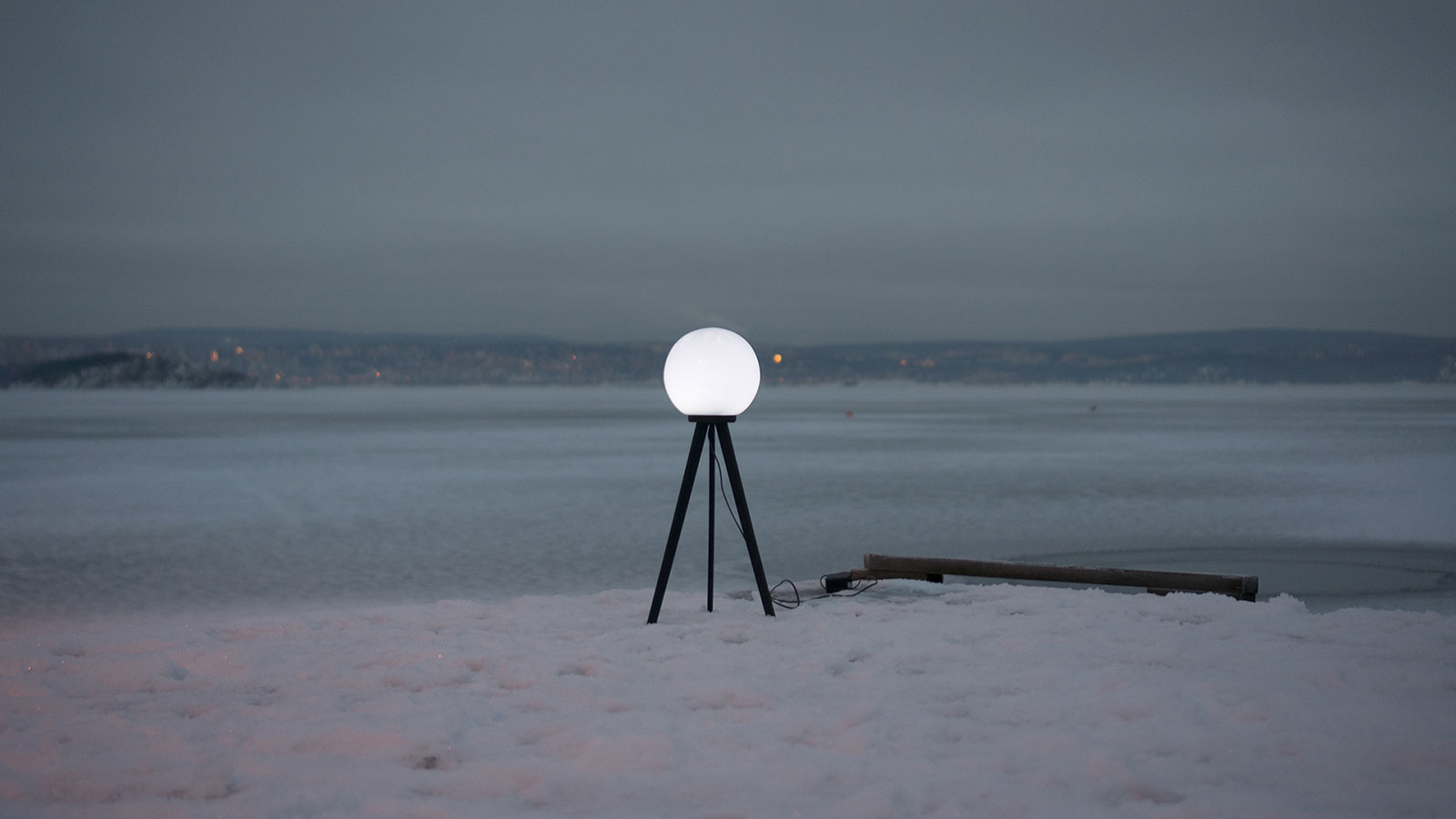
Satellite Lamps
Satellite Lamps is a project about making one of today’s most important infrastructures visible: GPS, the Global Positioning System. We built a series of lamps that change brightness according to the accuracy of the GPS signals they receive. Made with Einar Sneve Martinussen and Jørn Knutsen as part of the YOUrban research project at AHO.
-
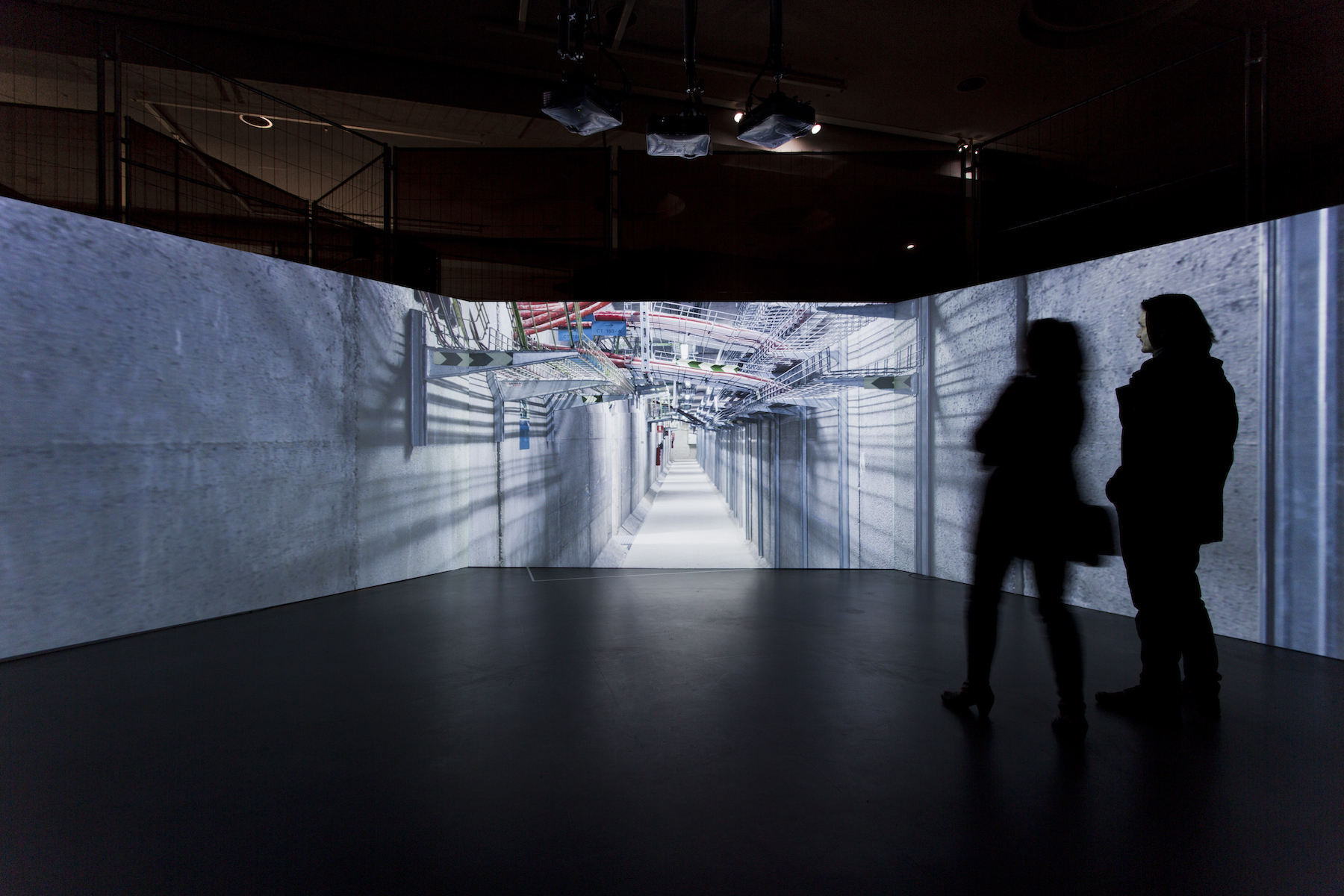
Internet Machine
Internet machine is a multi-screen film about the invisible infrastructures of the internet, shot inside one of the largest and most secure data centres in the world, run by Telefónica in Alcalá, Spain. I made it to show the physical reality of our data: the rooms, racks and machines through which ‘the cloud’ is transmitted and transformed.
-
CCD and computational photography
A few links on imaging and computation: from CCD by Joe Gregorio . Via BERG. from Computational Photography, American Scientist from What Photography Will Look Like By 2060
-
Augmentia
Anselm Hook , one of the founding thinkers of the geo-web, co-organiser of the first ARDevCamp at the Hacker Dojo in Mountain View late last year, lays out the emerging issues with Augmented Reality. He relates it to a whole host of known and unknown problems around ubiquitous computing, semantic publishing and data platforms. A few passages worth holding on to:
-
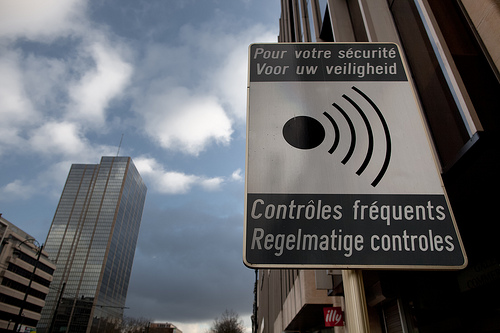
Pour votre sécurité
A single photograph of ‘Pour votre sécurité’ signage, dated 17 January 2010.
-
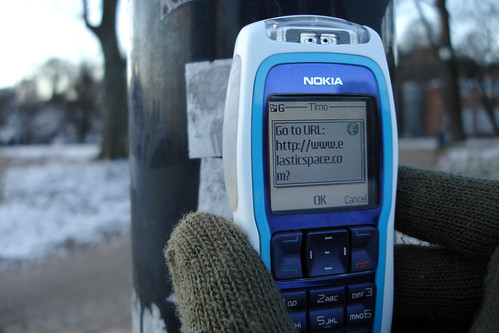
Touch
An AHO research project on what designers should do with NFC. Touch a phone to a tag, the tag answers, something happens. A phone call, an SMS, a URL. Funded by the Research Council of Norway, running since March 2006 with a project weblog at nearfield.org.
-
Tangible and social interaction
On a Nintendo DS in a café, two people are sending each other stick-figure drawings over PictoChat. On a TV in someone’s living room, four people are singing along to Singstar and making each other worse at it. At a bus stop in Berkeley, a phone is quietly logging which other phones it’s been near over the course of a day, a map of familiar strangers. Two lectures given at AHO in Oslo in January 2005, arguing that tangible and social interaction are the next chapter after the desktop. The PDF of the full presentation is here (1.9MB). Posted partly in response to Matt Jones and Chris Heathcote ‘s ETech presentation ( notes , link restored from Wayback). (Based on Dourish, see reading recommendations below.) Each successive development in computer history has made greater use of human skills: Electrical : required a thorough understanding of electrical design Symbolic : required a thorough understanding of the manipulation of abstract languages Textual : text dialogue with the computer, which set the standards of interaction we still live with today Graphic : graphical dialogue with the computer, using our spatial skills, pattern recognition, and motion memory with a mouse and keyboard
-
Sound objects
A box sits on the desk, with no markings on its surface. Touch it with a finger and the box makes a sound, impact, friction, deformation, depending on where you touch. There are soft buttons on the surface, but you can’t see them. You hear them. Notes from Mikael Fernström’s lecture at AHO in February 2005. Fernström runs the Interaction Design Centre at the University of Limerick, where the Soundobject project is working on sound in ubiquitous computing, a relatively unexplored area of interaction design. The aim of the Soundobject research is to liberate interaction design from visual dominance, to free up the eyes, and to do what small displays don’t do well. Sound is currently under-utilised in interaction design Vision is overloaded and our auditory senses are seldom engaged In the world we are used to hearing a lot Adding sound to existing, optimised visual interfaces does not add much to usability Sound is good at attracting attention, which is why alarms and notification systems work. We talked about ‘caller groups’ on mobile phones, assigning different ringtones to people in an address book, and how effectively that changes our relationship with our phones.
-
Photos of touch-based interfaces
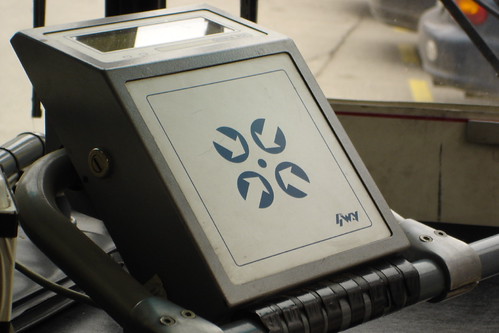
A February 2005 note that became the start of a longer-running photographic project. In the way Victor Lombardi was collecting images of cardreaders, I was starting to collect images of touch-based interfaces like the Oyster card and other ‘touchable’ interfaces on public transport.
-
Design Engaged 2004
Twenty-odd designers, researchers and writers sat around a long table in Amsterdam over a weekend in November 2004, taking turns to present. These are my notes, session-by-session, as written at the time. Design Engaged 2004 was an invitation-only gathering organised by Andrew Otwell. A small, intense weekend of conversation that turned out to be one of the generative moments of the design-web at that period. The FAQ has the full list of attendees. There are also lots of photos on Flickr . The growth of the soil How do we comprehend complexity How do we build structures around complex information Accreting meta-data: GPS data, descriptive information Break down of material as it hits the soil Soup, tags, condensed and distilled meta objects Sorting mechanisms, affinity browsers, related, filtering, emergent relationships, interrelationships How do we conceive a metaphor for building these processes? A structure that is meaningful for the users. Application design: movement through states of application to tending a flow of processes Tending to meta-data is a growth process DLA: diffusion-limited aggregation, a natural process model The relationships between metadata can be visualised as this.
-
Physical computing workshop
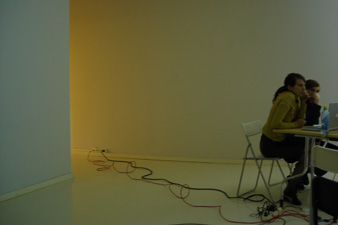
Notes from the ‘Making Sense’ physical computing workshop at Atelier Nord in Oslo, September 2004, organised by Erich Berger with Helen Evans and Heiko Hansen of HeHe. The intention was to avoid the screen entirely, to concentrate on simple interactions between sensors and outputs. But here we are, staring at PBasic and JAL while making lots of LEDs blink.
-
Geo-referenced photography
The simplest way to link a photograph to a location is to combine two time-stamps: one from the digital camera, one from the GPS receiver. Given both sets of timestamps over the same period, a series of images and tracklogs can be processed to stamp each image with location metadata. Compiled in July 2004 at the Hofn workshop in Iceland, during the work that became Time that land forgot . A working reference list of papers, projects, guidelines, tools and the technical issues that surrounded geo-referenced photography at that moment. Most of the links below are now dead; the list is preserved as a snapshot of what the state of the art looked like in 2004. Position-annotated Photographs: The Geotemporal Web GEOREP: Digital Library for Spatial Data Geographic location tags on digital images, Microsoft Portable digital photo album Tokyo Picturesque ( details ) Habitat Perspectives Photo Location ( metadata notes ) Geo Snapper WWMX web demo Good list of other photo mapping projects Commercial applications and scripts that link photographs to geographic information: Robophoto 93 Photo Street Photofusion Media Mapper OziPhotoTool GPS photo link GPS TrackMaker QuakeMap WWMX Travelogue app…
-

Social filtering for online forums
Yayhooray relaunched in June 2004 with a new version that uses social filtering to raise signal-to-noise. As far as I know, this is the first forum to use the buddy list as content filter. A short history of online-forum filtering approaches, and notes on what the new Yayhooray does.
-
Mobile outskirts workshop
A bus full of GPS receivers, cameras and impromptu artworks drove fifteen hours from Trondheim up to the islands of Lofoten. The workshop wiki and media archive are being kept updated via fairly limited wireless coverage. A short dispatch from the Mobile Outskirts workshop in Lofoten, June 2004, part of the Trans-cultural Mapping workshop series . A painless and creative bus drive up the Norwegian coast.
-
Notcon 04
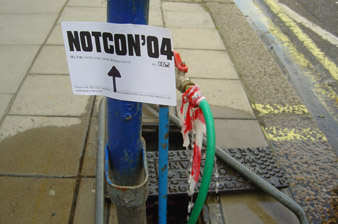
Two things from Notcon 04 in London worth writing up: Spotcodes, very simple circular barcodes readable with a Series 60 camera phone, storing 42 bits of data and usable for positional tracking; and Reverend Rat’s 10-watt Bluetooth receiver, a hundred times more powerful than a Bluetooth dongle.
-
Mobile social software applications
A list of mobile social software applications from 2004: Jabberwocky tracking familiar strangers, Fluidtime routing public transport in Turin, Dodgeball pinging your friends when they’re within ten blocks of you, Plazes tagging your location for the public, Mamjam chatting with others at the same venue by SMS. The first wave of location-aware social services, before smartphones. A growing list I compiled in June 2004 during early PhD research into mobile and locative systems. Descriptions below are taken from each project’s own site. Most of the projects are long gone; the list is preserved as a snapshot of what mobile social software looked like before the iPhone. Companion to the spatial annotation projects list . This research project explores our often ignored yet real relationships with Familiar Strangers. We describe several experiments and studies that lead to a design for a personal, body-worn, wireless device that extends the Familiar Stranger relationship while respecting the delicate, yet important, constraints of our feelings and relationships with strangers in pubic places. A visualization tool based on Mobster that enables users to explore their social encounters in new ways.
-
Spatial annotation projects
A reference list I compiled in June 2004 during early PhD research into locative media and spatial annotation. It includes Murmure in Vancouver’s Chinatown, Yellow Arrow stickers, Grafedia’s hyperlinked handwritten text, Urban Tapestries and dozens of others. The list is preserved as a snapshot of a field at a particular moment.
-
Creative Crossings workshop
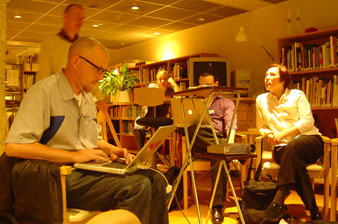
A triangular research network, practitioners from Britain, Canada and Finland, gathered in London to work on participatory and creative applications for mobile, locative and cross-platform media. Organised by m-cult, the Banff Centre and Arts Council England in April 2004.
-
Urban GPS experience
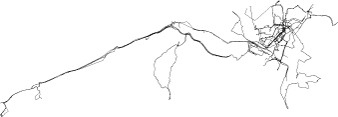
Three months of trying to record a clean dataset of GPS tracks to geo-locate my photography, in Oslo and London. Notes on what the Garmin GPS Map 60c does and doesn’t do in dense European cities, from the pavement and from public transport.
-
Technical books
This is one of a series of reading lists I put together between 2002 and 2004 when I was starting out in interaction and experience design, building out a personal canon from books I was buying, borrowing from libraries, or lending to students. The lists are grouped by topic. This one is the shortest, and the most time-stamped: the technical books I was reading when web standards, CSS and accessibility were still being argued over. Much of this has since become second nature or been superseded, but at the time these were the books shaping the craft. Zeldman’s Designing with Web Standards is the generational text of that moment, the book that made the case for separating structure from presentation and won the argument. Eric Meyer on CSS and Håkon Wium Lie’s book on CSS1 are the practical and theoretical companions. Joe Clark’s Building Accessible Websites is the conscience of the shelf. The Amazon links below are what I had at the time, most will be dead now, but the ISBNs will find you a copy. Jeffrey Zeldman. amazon.co.uk / amazon.com Jeffrey Zeldman. A fantastic how-to book for designers looking to get involved in web publishing and design. Takes the reader through writing, usability, architecture and technical tips. amazon.co.uk / amazon.com
-
Media theory books
This is one of a series of reading lists I put together between 2002 and 2004 when I was starting out in interaction and experience design, building out a personal canon from books I was buying, borrowing from libraries, or lending to students. The lists are grouped by topic. This one is media theory: how new media remakes old assumptions, the politics of the networked commons, and the relationships between people, computers and media. Manovich’s Language of New Media is the canonical starting point. Lessig’s The Future of Ideas is the political counterpart. Reeves & Nass’s The Media Equation is the one that stays with you, a readable empirical argument that we treat machines socially whether we mean to or not. Paul Taylor’s Hackers sits slightly to one side of the others; it’s the best academic treatment of hacker culture I know. The Amazon links below are what I had at the time, most will be dead now, but the ISBNs will find you a copy. Lev Manovich. amazon.co.uk / amazon.com Hubert Dreyfus. amazon.co.uk / amazon.com Lawrence Lessig. amazon.co.uk / amazon.com Paul Taylor. amazon.co.uk / amazon.com An extraordinary insight into hacker culture – academically rigorous but very readable and entertaining.
-
Mobile interaction design case study
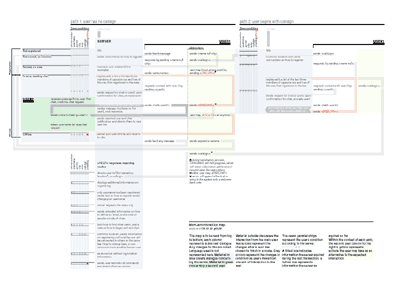
A 2001 case study of consultancy work for Pollen Mobile, written up as it happened. Jack Schulze, Adi Nachman and I designed the interaction architecture for Mamjam, a location-based social entertainment service built on SMS, letting people in the same venue chat with each other by text.